Golden retrievers weren’t bred to be family pets that fetch tennis balls in suburban backyards. They were developed in Scotland during the 1800s to retrieve waterfowl during hunting expeditions. That working drive still exists in well-bred lines, which is why hunters in Colorado continue choosing these dogs for upland game and waterfowl work. Training hunting dogs properly means understanding what golden retrievers were built to do and how Colorado’s terrain affects their performance.
Finding golden retriever puppies from Colorado breeders specifically bred for hunting ability requires different criteria than picking a family companion. Show lines and working lines have diverged over decades. Show dogs often have thicker coats, blockier heads, and calmer temperaments.
Working golden retrievers tend to be leaner, more athletic, and possess a stronger prey drive. Both are purebred goldens, but they serve different purposes. If you get lucky, you will find a great breeder who combines both qualities in one.
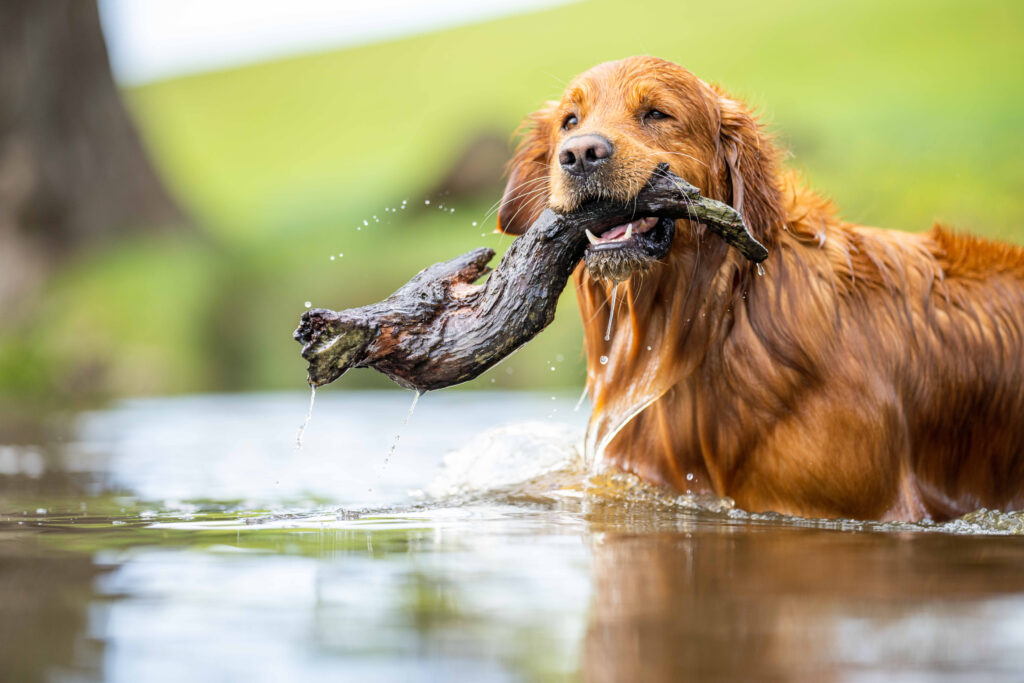
Golden Retriever Working Dog
Starting with the Right Puppy
Your hunting dog’s potential is determined before you bring them home. Pedigree matters. Look for parents with proven field work, titled in hunt tests or field trials. A puppy from parents who’ve never retrieved a duck probably won’t have the same natural ability as one from proven working stock.
Temperament testing at seven or eight weeks reveals personality traits that predict hunting aptitude. Throw a bird wing and watch which puppy goes after it most eagerly. Drop your keys and see who investigates. The bold, curious puppies that retrieve naturally make better candidates for hunting work than shy or disinterested ones.
Colorado’s hunting conditions differ from what golden retrievers encounter in other regions. High altitude affects stamina. Cold mountain streams test a dog’s willingness to work in tough conditions. Wide open sage country requires dogs that range appropriately without disappearing over ridges. Your puppy needs genetic hardiness that comes from breeding stock adapted to similar environments.
The First Eight Weeks at Home
Basic obedience comes before any hunting training. Your golden retriever puppy needs to understand sit, stay, come, and heel reliably before introducing birds or gunfire. These commands form the foundation every hunting dog builds on. A dog that won’t sit on command at home won’t sit in a duck blind when birds are working.
Socialization prevents problems later. Expose puppies to different surfaces, sounds, and situations. Let them walk on gravel, mud, and through shallow water. Play recordings of gunshots at low volume during feeding time. Drive them around in the truck. Golden retriever puppies Colorado hunters raise need exposure to elevation changes, cold water, and rocky terrain they’ll encounter during actual hunts.
Retrieving drive develops naturally in most golden retrievers, but you can enhance it. Start with soft bumpers thrown short distances. Keep sessions brief and always end on success. Never force a puppy to retrieve or punish them for not bringing something back. That kills enthusiasm faster than anything else.
Formal Training for Hunting Dogs
Around six months, formal retriever training begins. This isn’t the time for amateur experimentation if you want a reliable hunting partner. Professional trainers who specialize in golden retrievers understand the breed’s sensitivity and how to push them without breaking their spirit.
Force fetch training remains controversial, but it produces reliable retrievers that won’t drop birds or refuse difficult retrieves. The method teaches dogs they must pick up and deliver anything you send them for, regardless of conditions. Done correctly by experienced trainers, it doesn’t damage a dog’s personality. Done poorly, it ruins dogs permanently.
Steadiness training teaches impulse control. Your golden retriever must sit quietly while birds fall, wait for your command, then retrieve only the bird you indicate. This takes months of repetition. Young dogs want to chase everything that moves. Breaking that instinct without breaking their enthusiasm requires patience and consistency.
Water Work in Colorado
Colorado’s mountain lakes and rivers present unique challenges. The water runs colder than what golden retrievers encounter in southern states. Some dogs naturally love water; others need encouragement. Start with warm, shallow water during the summer months. Wade in yourself to show it’s safe. Toss bumpers just beyond the shoreline where puppies can succeed easily.
Gradually increase distance and difficulty. Add current, colder temperatures, and vegetation. Golden retrievers have water-resistant coats, but they’re not impervious to cold. Watch for signs of hypothermia during training sessions in frigid conditions. Shorter, successful retrieves beat long sessions that leave dogs shivering and reluctant.
Decoys help dogs learn to ignore distractions and focus on downed birds. Set up realistic hunting scenarios with decoy spreads and multiple marks. Colorado waterfowl hunting often involves jump shooting small ponds or hunting reservoirs with limited cover. Train in similar conditions so nothing surprises your dog on opening morning.
Upland Game Training
Pheasant, chukar, and dove hunting require different skills than waterfowl work. Golden retrievers naturally quarter and hunt cover, but they need guidance learning proper range. You want a dog working within gun range, not racing a quarter mile ahead, flushing birds you’ll never shoot.
Electronic collars help with range control once dogs understand basic commands. The collar isn’t punishment, it’s communication at a distance. Your golden retriever learns that the vibration or low stimulation means check in, hunt closer, or return to heel. Proper collar conditioning prevents the fear and confusion that result from improper use.
Hunting dogs need exposure to live birds before hunting season. Pen-raised birds work for initial training, but wild birds behave differently. Find properties where you can train on released game birds in realistic hunting conditions. Colorado has preserves where you can work hunting dogs on pheasant and chukar throughout the year.
Maintaining Working Drive
Off-season training keeps skills sharp. Even short weekly sessions retrieving bumpers maintain your golden retriever’s responsiveness. Summer conditioning builds the stamina needed for long hunting days at altitude. Swimming provides low-impact exercise that strengthens retrieving muscles without stressing joints.
Working golden retrievers stay mentally sharp when they have jobs. Bored golden retrievers develop behavioral problems. Regular training sessions satisfy their need to work and maintain the bond between hunter and dog.
Golden retriever puppies Colorado breeders raise specifically for hunting work represent generations of selection for working ability. Training brings out the genetics already present. You’re not creating a drive that doesn’t exist, you’re channeling natural instincts toward a productive hunting partnership. Done right, training hunting dogs becomes as rewarding as the hunts themselves.