
You bring your Golden Retriever puppy home, and for a moment, everything feels perfect. You see the floppy ears bounce with every step. You see a wagging tail following you everywhere, and those big brown eyes are just too cute. Then comes the tough part. That tiny, adorable puppy has no idea where the bathroom is. You must take this upon yourself to potty train your Golden Retriever.
Many new owners underestimate this stage, then quickly realize how demanding it becomes. Most puppies develop reliable habits within three to six months, although learning speed varies based on structure and repetition.
Understanding Your Puppy’s Bathroom Needs
Golden Retrievers are medium to large dogs with bladders that grow as they do. At eight weeks old, your puppy can hold their bladder for about three to four hours max. That’s not a lot of time, which is why accidents happen so frequently in the beginning.
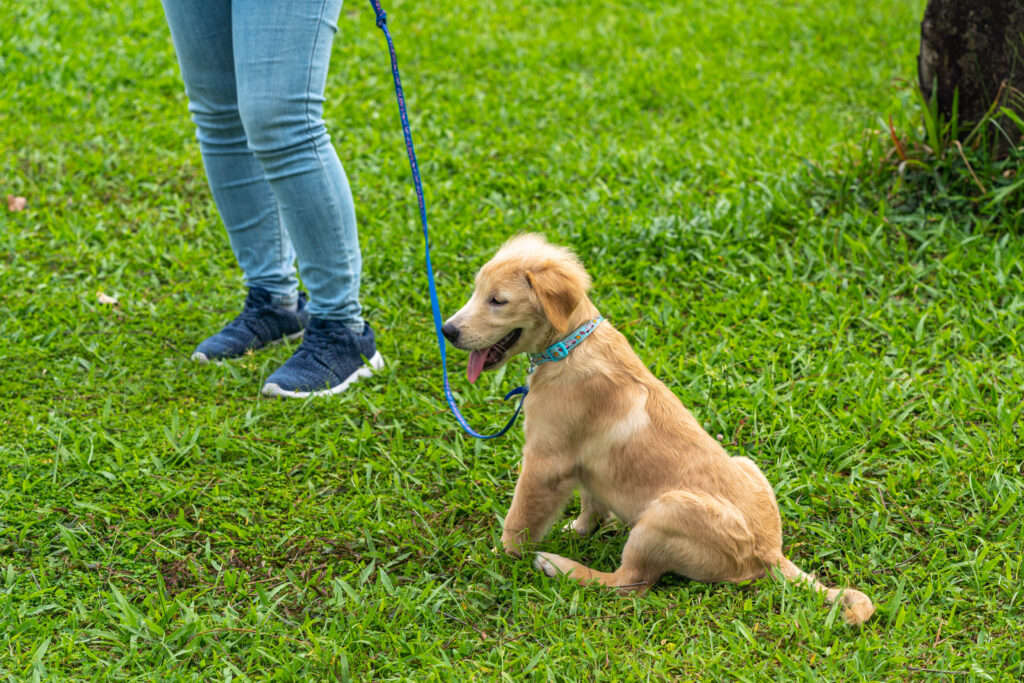
Potty Training Your Puppy Should Be Consistent!
Golden Retrievers are also enthusiastic dogs. That excitement can lead to what’s called submissive or excited urination, where your puppy dribbles a little when greeting you or during play. This isn’t a potty training failure. It’s involuntary and usually stops as your puppy matures. Never punish excited urination. It only makes the problem worse.
Puppies need to go at predictable times that include right after waking up, within five to thirty minutes after eating or drinking, after playing, and before bed. You will prevent most accidents and build good habits faster if you catch these moments and get your puppy outside.
Essential Supplies for House Training Success
The essential supplies for house training success are given below.
- Right-sized crate: Get a crate that is just big enough for your puppy to stand, turn, and lie down comfortably. Too much space lets them use one corner as a bathroom and sleep in another. Dogs avoid dirtying their sleeping area, which helps training.
- Tasty training treats: Use small, soft treats your puppy really loves. Give one right after they go potty outside so they understand they did something good.
- Enzymatic cleaner: Regular cleaners don’t fully remove smells. An enzymatic cleaner removes the scent completely, so your puppy won’t keep going back to the same spot.
- Leash for potty time: Use a leash even if your yard is fenced. It helps guide your puppy to the right spot and keeps them focused.
Making a Potty Training Schedule
Consistency is everything when house training a Golden Retriever. Puppies need a routine, and a fixed schedule makes it easier for them to understand what’s expected.
Start your day by taking your puppy outside immediately after they wake up. Don’t check your phone, don’t make coffee, don’t brush your teeth. The second your puppy wakes up, they need to go.
After your puppy eats breakfast, wait five to thirty minutes and take them out again. Younger puppies need to go sooner after meals. Watch for signs like sniffing the ground, circling, or suddenly becoming restless.
Throughout the day, take your puppy out every one to two hours. After naps, after playtime, and before bed, always take your puppy outside. Before bedtime, make one last trip outside so your puppy’s bladder is as empty as possible for the night.
During the night, expect to wake up once or twice with a very young puppy. As your puppy gets older, they’ll be able to hold it longer overnight. By four to six months, most Golden Retrievers can make it through the night without a bathroom break.
Why a Designated Potty Spot is Important?
Always take your puppy to the same spot in the yard. The scent from previous trips reminds them what this area is for, and it speeds up the process. Choose a spot that’s easy to clean and away from where your puppy plays.
When you get to the potty spot, stand quietly and wait. Don’t play with your puppy or talk too much. As soon as your puppy starts to go, use a command like “go potty” or “do your business.” Use the same phrase every time.
The second your puppy finishes, praise them a lot. Like they just won a gold medal. Use an excited, happy voice, and give them a treat immediately. Maybe even play for a minute or two. This positive association is what makes outdoor potty breaks so rewarding.
If your puppy doesn’t go after a few minutes, bring them back inside but watch them closely. Try again in ten to fifteen minutes.
Positive Reinforcement Beats Punishment Every Time
Golden Retrievers are sensitive dogs. They want to make you happy. Positive reinforcement makes training faster and more enjoyable for everyone as they will be doing what they want to do.
When your puppy goes potty outside, reward them immediately. The timing is very, very important. Carry treats in your pocket and deliver them within seconds of your puppy finishing.
If you catch your puppy in the act of having an accident, calmly say “oops” or “uh-oh” to interrupt them, then quickly but gently pick them up and carry them outside to finish. If they finish outside, praise and treat them.
Recognizing the Signs Your Puppy Needs to Go
Golden Retriever puppies usually give you warning signs before they have an accident. Sniffing the floor in circles is a huge sign. Your puppy is looking for the right spot. The moment you see this behavior, get them outside fast.
Restlessness, whining, running to the door, or suddenly stopping play to look distracted are all signals that your puppy needs to go. Pay attention to your puppy’s habits, and you’ll start to recognize their unique potty signals.
Conclusion
House training a Golden Retriever can totally work. But all great things take time and you need to be tough. Most puppies develop reliable bathroom habits within only a few months when you stick to a routine. You just need to use positive reinforcement and pay attention to their signals.
The important thing to note is starting early and treating accidents as learning opportunities rather than failures. Your Golden Retriever wants to please you, and this will help. Give them clear expectations, lots of praise, and plenty of potty breaks. They will get the hang of it soon. Every puppy is different, so don’t worry. A little patience and kindness is all you need during those early struggles.
Still feels hard? Having a tough time and feel like it is impossible It is not. You just need a professional like Slater Creek that can raise healthy, well-socialized puppies.
Frequently Asked Questions
How long does it take to fully potty train a Golden Retriever puppy?
Most Golden Retrievers are reliably house-trained by four to six months old, though some take up to eight months.
Can I use puppy pads for potty training?
Puppy pads can confuse your puppy about where it’s acceptable to go. If you plan to train your Golden to go outside, skip the pads and take them directly to the yard from the start.
Is it normal for my Golden Retriever to have nighttime accidents?
Yes, it is normal for your Golden Retriever to have nighttime accidents, especially before four months old. Younger puppies can’t hold their bladders through the night. Take them out once or twice overnight until they mature.
What should I do if my puppy has accidents right after being outside?
Your puppy might be too distracted outdoors to focus on going potty. Use a leash to keep them in the designated spot, stay quiet, and wait until they go before allowing play.